

Here’s something I don’t say enough: most days, my faith doesn’t feel dramatic. It feels tired.
I get up, I make coffee, and I try to squeeze the minutes in with my Bible before the day swallows me whole. Some mornings those minutes turns into something meaningful. Most mornings, honestly, I’m reading the same three verses for the fourth time in a row, nodding along, and still walking away wondering, “Okay… but what do I actually do with this?”
If you’ve ever felt that gap, the space between reading Scripture and understanding it well enough to live differently because of it, you’re not alone, and you’re not doing it wrong.
The New Testament letters weren’t written to be skimmed. Paul wasn’t writing tweets. John wasn’t writing captions. These are dense, situational, sometimes confusing documents written to real churches with real problems, and two thousand years of distance can make them feel like a locked door.
That’s exactly why devotionals matter. While we don’t need someone to think for us, we do need someone to walk with us: someone who has spent a lifetime in these pages and can point out what we’d otherwise miss.
A good devotional doesn’t replace your Bible. It sits next to it, like a wise friend leaning over your shoulder saying, “Here, let me show you something.”
That’s the space Spurgeon and the Church: Acts through Revelation with Devotions from Charles Spurgeon is trying to fill. And after spending real time with it, I have thoughts. Some glowing, one or two honest hesitations, and a clear opinion on who this book is actually for.
The Promise: What This Book Says It Will Do
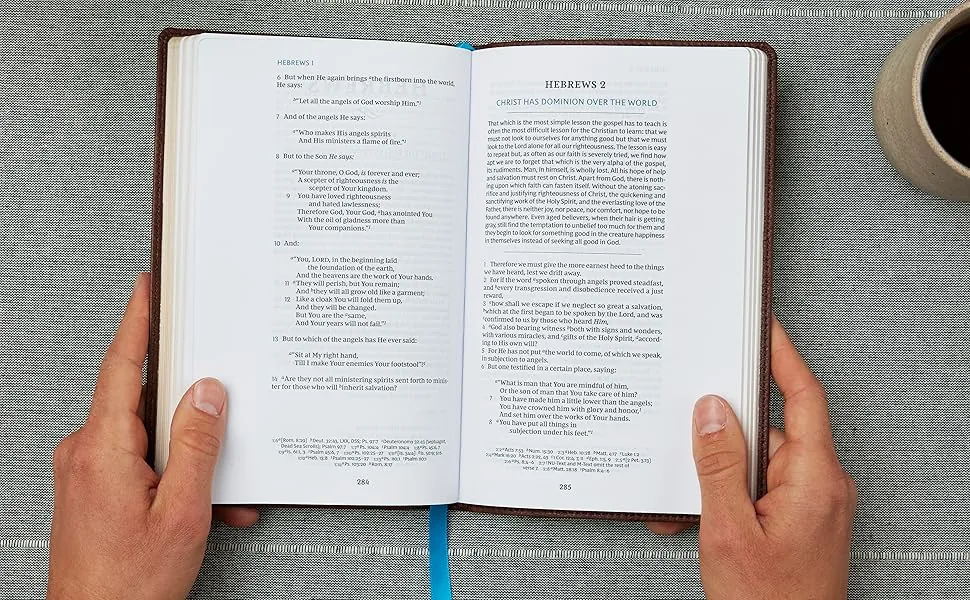
The pitch is simple enough to fit on the back cover: take the preaching of Charles Spurgeon, the “Prince of Preachers,” a man who preached to roughly 10 million people in his lifetime and published over 1,900 sermons, and pair his insights with most of the New Testament, from Acts all the way through Revelation.
The stated goal is steadfastness. The publisher’s language is direct: the early church was “urged to remain steadfast in its love for Christ,” to see Jesus as their great hope in the middle of pressure, persecution, and uncertainty.
Spurgeon, according to the introduction, understood that this same struggle of staying anchored when life gets hard is “the great need of the church in every era.”
In other words: this isn’t a 19th-century antique. It’s a devotional companion for people who are tired, distracted, or discouraged, which, if we’re honest, describes most of us any given week.
Structurally, here’s what you’re getting: a brief extract from Spurgeon’s sermons and collected works before each chapter of Acts through Revelation. It’s printed with single-column, verse-by-verse NKJV text, devotional thoughts for each chapter, margins wide enough to take notes, a satin ribbon marker, translator’s notes at the bottom, two-color printing, and a comfortably large 9.5-point font.
It’s not a commentary. It’s not a study Bible. It’s something more like a guided reading experience with a seasoned preacher whispering context in your ear before you start.
Spurgeon and the Church: Acts through Revelation with Devotions from Charles Spurgeon
Publisher
Thomas Nelson
Released July 7, 2026
Binding Leathersoft

Deep Dive: What I Actually Liked

1. The layout invites you to slow down.
I’ll be honest. So many people that I encounter have a default mode with Scripture that is speed-reading. The goal is to check the box and move on with the day. But the single-column format with generous margin space changes the posture entirely.
Picture this: it’s early, the house is quiet, and instead of cramming a chapter in before your coffee gets cold, you actually have room to write a thought in the margin. A question, a conviction, a prayer. That small design choice does something psychological. It tells you, “This page expects you to stay a while.”
For someone in a genuinely messy season—new baby, demanding job, grief, whatever it is—that invitation to slow down might be the difference between reading the Bible and actually meeting God in it.
2. Spurgeon’s voice adds weight without confusion
Something I absolutely appreciate about Spurgeon is he didn’t write like a modern devotional author trying to be relatable on purpose. He wrote like a pastor who had buried church members, fought his own battles with depression, and still trusted God completely.
He gives you a seasoned voice saying, “Here’s why this mattered to real people before you ever picked this book up.” That turns abstract doctrine into something you can actually feel the weight of.
3. It moves through the part of the New Testament people avoid.
The truth is, most people read the Gospels regularly and then avoid Acts through Revelation because it feels harder. There’s more theology, more history, and a lot more “wait, what’s happening here?” This book puts its whole weight into that stretch of Scripture.
If you’ve ever stalled out in Galatians or gotten lost trying to figure out how James and Paul actually don’t contradict one another on faith and works, having a steady voice walking beside you through those books is valuable. It’s the part of the Bible most devotionals skip, and this one leans in.
Deep Dive: What to Watch Out For
I have an honest hesitation: Spurgeon was a 19th-century Reformed Baptist preacher, and his theological instincts—particularly around God’s sovereignty, election, and human responsibility—come through in his writing whether the book flags it or not.
If you’re new in your faith, or if you’re not familiar with Spurgeon’s tradition, some of his language might land differently than a modern author’s would. This isn’t a knock on the resource; it’s just worth knowing going in.
You may find yourself wanting to pause and ask, “Wait, is that exactly how I’d say it?” That’s not a bad thing, wrestling with a strong voice is part of growth, but it means this book rewards the reader who’s ready to think.
Why a Devotional Like This Matters for Your Faith
The “Simple Theology” version of why this matters: sanctification, the process of becoming more like Christ, doesn’t happen by accident. It happens through steady, repeated exposure to Scripture, applied to real life.
Understanding Acts through Revelation matters because that’s where we learn how the church was actually meant to function under pressure, and how our hope is supposed to stay fixed on Jesus when everything else is shaking.
A tool like this doesn’t do the growing for you, but it puts a faithful voice in your ear while you do the work yourself.

The Verdict
Buy this if: you want a steady companion for reading through the harder half of the New Testament, you appreciate room to journal your own thoughts, and you’re open to hearing from a strong, historically Reformed voice without needing to agree with every conclusion he draws.
Skip this if: you’re brand-new to the faith and want something gentler and more contemporary, or if unfamiliar theological language tends to derail your reading rather than deepen it.
For the right reader, someone ready to slow down and think, this is a worthwhile companion for the road from Acts to Revelation.
Leave a Reply